
Included Health
Included HealthMedical
4.81.29K Reviews
- Version
- 2026.34.3
- Installs
- 100.00K
- Age Rating
- Everyone
Screenshots
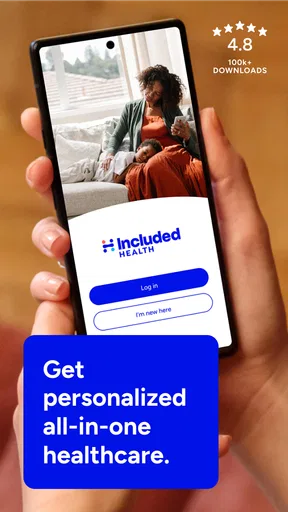
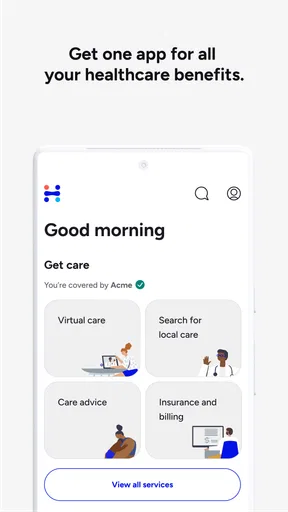
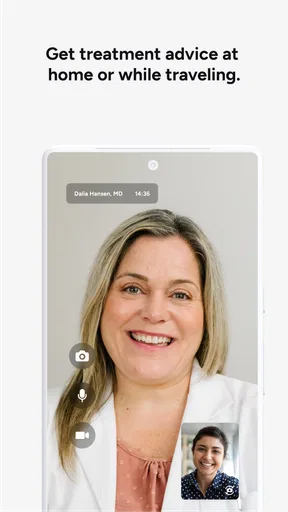
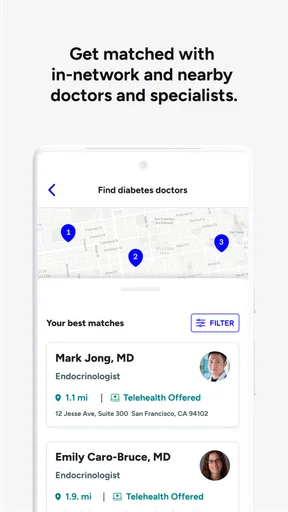
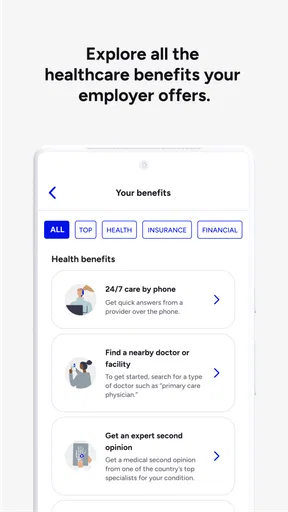
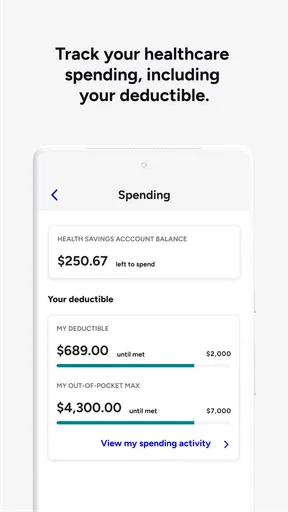
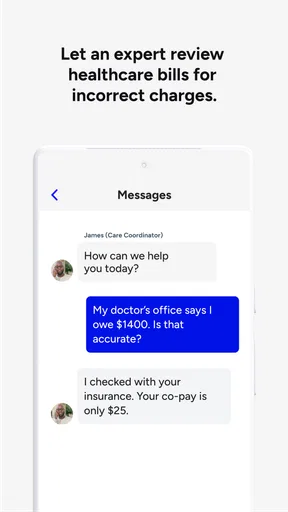

Our Review of Included Health
 Analysis by Appyee
When I look at Included Health, I see a medical app built around one particularly useful idea: helping people find a sensible next step when the healthcare system feels confusing. Its focus is not simply “talk to a doctor online.” The more interesting promise is combining virtual care with healthcare navigation and advocacy support, so the app can be useful before, during, and after a medical appointment. In my experience, that makes it more practical than a basic video-consultation tool for people who are unsure where to begin.
The app is developed by Included Health and is available as a free medical app for everyone. It has been around since 2014, which gives it a more established feel than a brand-new health service. On the Android listing, it has an average rating of 4.8 from roughly twelve thousand ratings, with more than one hundred thousand installs. Those figures do not tell me whether every interaction will be smooth, but they do suggest that many users find the service useful enough to keep using.
My overall view is positive, with one important qualification: Included Health is most valuable when you need help making a healthcare decision, not when you already know exactly which specialist, clinic, or treatment you want. Its strength is reducing uncertainty. If your situation requires emergency care, a physical examination, or immediate access to local services, a navigation app should not replace direct medical attention.
Navigation is the capability that makes Included Health different
I’d use this section to explain why Included Health is most helpful before a care decision is settled: it can help turn a vague concern into a more considered next step, rather than leaving you to choose from a list of providers alone. I’ll also look at how that guidance fits everyday mobile use, where a clear connection can matter as much as a clear plan.
Turning a vague health concern into a practical next step
The central capability I would highlight is healthcare navigation. Many medical apps begin with a clear service: book an appointment, start a video call, track a symptom, or refill a prescription. Included Health approaches the problem from the other direction. It is designed for the moment when the user is asking, “What should I do next?”
That distinction matters because healthcare decisions are rarely as tidy as app menus suggest. A person may have a new symptom but not know whether primary care is appropriate. Someone else may already have a diagnosis but feel lost about finding the right kind of support. Another user may need help understanding how to move through a complicated care journey. In those situations, navigation can save time and prevent the common mistake of choosing a service simply because it is the first one that appears in a search.
I found this approach more valuable than a long directory of doctors. A directory gives you options, but it still leaves you to judge which option fits your problem. Navigation is useful because it frames the decision. It encourages you to think about urgency, the kind of help you need, and whether virtual care is appropriate before you commit to an appointment.
The app also includes advocacy support, which extends the idea beyond a single consultation. Advocacy is especially relevant when a person is dealing with several appointments, unfamiliar medical language, or a process that feels difficult to coordinate. The benefit is not necessarily that the app solves every healthcare problem instantly. The benefit is that it can give the user a clearer path through a system that often expects patients to act like administrators.
Why this is more than a standard telehealth shortcut
A standard telehealth app is often excellent when the question is already defined: “I need to speak to a clinician about this issue.” Included Health is better suited to the earlier stage, when the question is still being shaped. That makes it a useful companion to virtual care rather than merely another video-call service.
This difference also affects expectations. I would not open Included Health expecting it to function like an emergency line, a complete medical record, or a replacement for every local provider. I would open it when I need help deciding which route makes sense. That could mean exploring virtual care, locating an appropriate type of support, or getting assistance with a more involved healthcare journey.
The practical advantage is reduced mental load. Instead of searching the internet, comparing unrelated clinics, and trying to interpret medical terminology alone, I can start with the situation I am facing. That is a small change in workflow, but it can be significant when I am worried, short on time, or helping a family member.
The best way to approach the first interaction
My advice is to enter the app with a short, organized description of the problem rather than a long stream of symptoms. Note what changed, how long it has been happening, and what kind of help you are hoping to find. This does not turn the app into a diagnostic tool, and it should not be used to self-diagnose. It simply makes the navigation conversation more focused.
A useful habit is to separate three questions before starting: “How urgent might this be?”, “What type of professional might help?”, and “What practical obstacle is stopping me from getting care?” The first question protects against treating a serious situation casually. The second helps the app guide you toward a more suitable route. The third is where advocacy support may become especially useful, because the barrier may be coordination rather than medical knowledge.
This is one of the less obvious strengths of the service: its value increases when the user treats it as a decision aid instead of a search box. If I only use it to look for a doctor by name, I am missing the part that makes it different from ordinary healthcare directories.
What using it may feel like in everyday life
Imagine waking up with a health concern before a busy workday. You are not sure whether it deserves an appointment, whether a virtual visit is enough, or whether you should look for a particular specialist. With a conventional search, you might read several pages, worry about contradictory advice, and still end up choosing an appointment at random.
With Included Health, the more sensible workflow is to describe the concern, consider the available care route, and use the guidance to decide what to do next. If virtual care fits, that can be the convenient option. If the situation calls for a different kind of support, the navigation element is more useful than forcing everything into a video consultation.
Later, if the issue becomes a longer journey involving several steps, advocacy support can help keep the user from treating each appointment as an isolated event. That does not remove the need to follow professional medical advice, but it can make the overall process easier to understand and manage.
The scenario where I would recommend it first
The strongest use case is a non-emergency health concern combined with uncertainty about the healthcare route. This might be a new issue that does not obviously belong to one specialty, a situation where you are unsure whether virtual care is suitable, or a care journey that has become difficult to coordinate.
I would also recommend considering it when helping someone who feels overwhelmed by healthcare administration. A relative may understand that they need care but struggle to identify the right entry point. In that case, the navigation and advocacy angle may be more helpful than simply handing them a list of clinics.
The app is particularly appealing to people who value a guided process. Some users are comfortable researching providers, checking credentials, calling offices, and comparing options on their own. Others lose valuable time because every step requires a new search. Included Health is aimed much more at the second group.
There is a practical trade-off here. Guidance can make the first decision easier, but it may feel slower to someone who already knows exactly what they want. If I have a specific clinician and appointment type in mind, a direct booking channel may be more efficient. The app earns its place when the problem is uncertainty, not when the plan is already complete.
What virtual care does well inside this workflow
Virtual care is most convenient for situations where a conversation can provide useful direction without an immediate physical examination. It can reduce travel, make it easier to ask an initial question, and provide a starting point when visiting a clinic feels disproportionate to the concern.
However, I would treat virtual care as one route among several, not as the automatic answer. Some conditions require hands-on assessment, testing, imaging, or urgent treatment. A polished digital experience cannot change that medical reality. The navigation function is therefore important because it should help users think about the right level of care rather than encouraging them to keep everything online.
That is another reason I prefer the broader design of Included Health to a service that only advertises quick consultations. The best digital healthcare tools do not merely make access faster; they help users avoid choosing the wrong kind of access.
Where the experience can become frustrating
The largest limitation is that navigation cannot eliminate every healthcare constraint. Availability, local options, clinical complexity, and the user’s own circumstances still affect what happens next. If I expect the app to produce an immediate, perfect answer for every concern, I am likely to be disappointed.
There is also a natural tension between guidance and control. A guided healthcare path may ask me to provide context before I reach the service I had in mind. That can feel reassuring when I am uncertain, but unnecessary when I am in a hurry. Users who prefer to make every decision independently may find the navigation-first approach less direct than a conventional provider directory.
Another point is that medical apps require careful communication. A user may interpret a suggested route as a diagnosis or a guarantee that a certain level of care is sufficient. I would use the app as an aid to decision-making, while keeping professional instructions and urgent warning signs in the foreground. It is helpful, but it is not a substitute for judgment in a serious situation.
Privacy and account comfort can also influence whether someone enjoys the experience. Health questions are personal, and some people will naturally prefer speaking directly with a local clinician rather than beginning inside an app. Included Health is a better fit for users who are comfortable using digital tools as part of their care process.
How it compares with familiar alternatives
Compared with a hospital or clinic website, Included Health offers a broader starting point. A clinic site is usually best when you already know where you want to go. Included Health is more useful when you are deciding what kind of care makes sense before choosing a provider.
Compared with a general search engine, it offers a more focused healthcare workflow. Search engines can expose a huge amount of information, but they also make the user sort trustworthy guidance from irrelevant or alarming results. The advantage here is not that the app knows everything; it is that it organizes the next decision around care rather than around web pages.
Compared with a basic telehealth app, Included Health adds value through navigation and advocacy. A telehealth-only alternative may be preferable if speed and a direct clinician connection are the only priorities. Included Health is stronger when the user needs help understanding the route, coordinating steps, or deciding whether virtual care is appropriate in the first place.
Compared with a personal health tracker, the purpose is completely different. A tracker is useful for recording habits, measurements, or symptoms over time. Included Health is about accessing and organizing care. Someone looking for charts, reminders, or long-term self-monitoring should choose a tool built for those tasks instead.
Three ways I would use it more effectively
First, I would use it before an appointment rather than only after a problem becomes complicated. Early navigation can prevent an unsuitable booking and make the eventual conversation with a clinician more focused. This is especially useful when the symptom does not clearly point to one specialty.
Second, I would keep a concise timeline ready. A few clear details about when the issue began, what has changed, and what has already been tried can make any healthcare interaction more productive. The app does not replace medical history, but organized information helps the next step happen with less backtracking.
Third, I would treat advocacy as a coordination resource, not a promise that someone else will manage every decision. The user still needs to understand recommendations, follow through with appointments, and ask questions. Advocacy is most valuable when it reduces confusion between steps, not when it is used as a reason to disengage from the process.
A fourth useful habit is to revisit the original goal after receiving guidance. Was I looking for reassurance, a clinician, a second opinion, help finding care, or support with logistics? If the goal changes, the most suitable route may change too. This prevents me from forcing the app into a single role.
Who will gain the most from it
Included Health is a strong choice for people who find healthcare navigation stressful, especially those dealing with a new concern or a multi-step care journey. It can also suit busy users who want a guided digital starting point instead of spending time comparing disconnected services.
It may be useful for caregivers and family members as well. When another person is involved, the challenge is often not only medical; it is remembering what needs to happen next and finding a route that everyone understands. The navigation and advocacy focus speaks directly to that practical problem.
I would be more cautious about recommending it to someone who needs emergency help, a physical assessment, or a very specific specialist immediately. In those cases, direct local medical services are the better choice. I would also point experienced healthcare users toward a more direct provider option if they already know exactly what appointment they need.
My final assessment of the app
Included Health stands out because it treats uncertainty as a healthcare problem in its own right. Its most meaningful contribution is not simply putting a consultation on a screen. It helps users think through the route to care, with virtual care available as part of that process and advocacy support for situations that need more coordination.
I appreciate that balance. The app is not the right answer for every medical situation, and I would never use it to delay urgent treatment or replace a necessary in-person evaluation. But for everyday, non-emergency concerns where the hardest question is “Where do I start?”, it offers a more thoughtful approach than searching randomly or booking the first available appointment.
The current version is 2026.34.3, and the app remains free to install with an Everyone content rating. Those details make it easy to try, but the real reason to consider it is more specific: Included Health is most useful when you need a clearer healthcare path, not just another place to make a video call.
Verdict
Strengths of Included Health
- Combines virtual care, mental health, and benefits support in one app.
- Appointment scheduling is convenient for eligible members.
- Secure messaging helps users follow up with care teams remotely.
- Personalized guidance can simplify complex healthcare decisions.
- May reduce the need for unnecessary in-person visits.
Limitations of Included Health
- Access depends on employer or health-plan eligibility.
- Available services and providers vary by location and membership.
- Some appointments may have limited availability during busy periods.
- Certain treatments or referrals may still require in-person care.
- The app may collect sensitive health and personal information.
Similar Picks in This Category
View All
WebMD: Symptom Checker
WebMD, LLC4.1

Microphone Amplifier
DOSA Apps4.2

Anatomy Learning - 3D Anatomy
3D Medical OU4.5

Period Tracker and Calendar
SimpleInnovation4.9

GoodRx: Prescription Coupons
GoodRx4.8

CVS Health
CVS Pharmacy4.5
Frequently Asked Questions
What is Included Health, and what services does it provide?
Included Health is a digital healthcare platform designed to help members access medical guidance, virtual care, expert opinions, and support with navigating the healthcare system. Depending on your employer or health plan, the app may connect you with doctors, specialists, mental health professionals, or care coordinators. Available features can vary, so it is important to confirm what your specific membership includes before relying on the service.
Can I use Included Health without an employer or health insurance plan?
Included Health is generally offered through participating employers, insurance providers, or other eligible organizations rather than as a completely open healthcare app. When signing up, you may need to verify your identity and membership using information connected to your benefits plan. If the app does not recognize your details, contact your employer’s benefits team or Included Health support to check whether you are eligible.
Does Included Health replace my primary doctor or provide emergency medical care?
No. Included Health can make healthcare easier to access, but it should not be considered a replacement for your regular physician, ongoing treatment plan, or emergency services. The app may provide virtual consultations, care navigation, or specialist support, but serious symptoms require immediate attention from local emergency services. Always follow the medical advice of qualified professionals familiar with your history.
Is my personal health information secure when using Included Health?
Included Health handles sensitive medical and personal information, so privacy and security are important considerations before using the app. The platform is intended to protect health data according to applicable healthcare privacy requirements, but users should still review its privacy policy and permissions. Avoid sharing account credentials, use a secure device, and log out when accessing the app on a shared phone.
Is Included Health free to download and use?
The Included Health app may be free to download, but the cost of consultations, specialist services, or other care options depends on your employer, insurer, membership, and benefit design. Some services may be fully covered, while others could involve copayments, deductibles, or separate charges. Before booking care, review the pricing information shown in the app or contact your benefits provider for confirmation.
